
How Much Does an Accent Wall Cost?
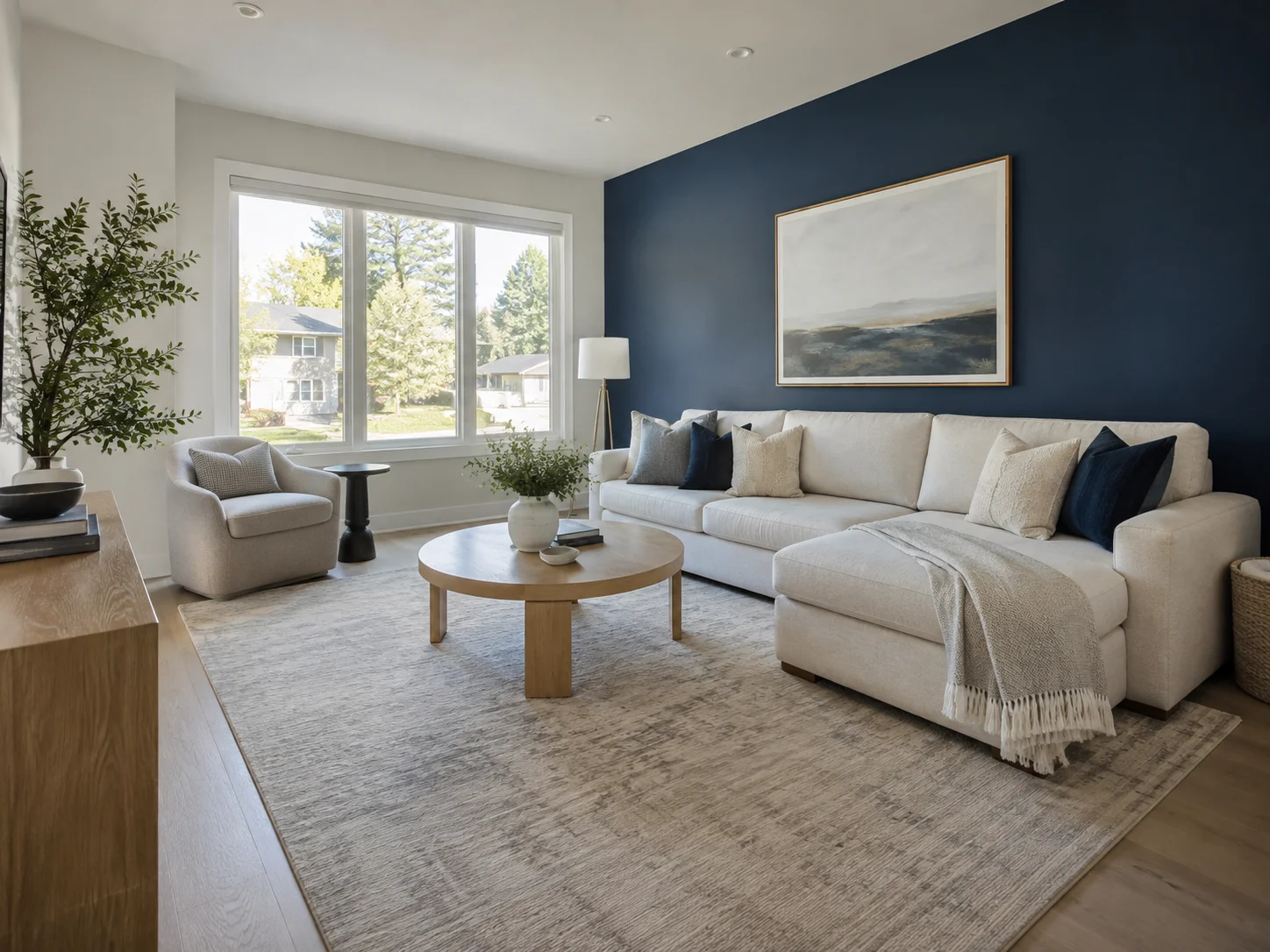
An accent wall is the easiest way to bring colour into a room without committing to it everywhere. Because it is usually one wall instead of four, homeowners often assume the price drops proportionally. It does not, quite. Prep, precision, and paint choice carry more weight per wall than they do across a whole room, so the real cost depends on a handful of specific factors rather than simple square footage.
What Actually Moves the Price
Painters price an accent wall by looking at the same things they would check on any wall, just concentrated onto one surface:
- Wall size and ceiling height. A single 9-foot wall and a two-storey feature wall behind a staircase are both "one wall," but the ladder work and reach alone put them in different categories.
- Surface condition. Nail holes, old adhesive, drywall seams, or uneven texture all need to be corrected before paint goes on, and an accent wall gets looked at more closely than a wall you will only walk past.
- Colour depth and coverage. Moving from a light neutral to a saturated navy, forest green, or black usually means an extra coat, sometimes two, to get even coverage without the old colour showing through.
- Finish and sheen. Eggshell and matte go on straightforward. A higher-sheen finish shows every roller mark and brush line, so it demands slower, more careful application.
- Line work. A clean, crisp edge where the accent wall meets the ceiling, trim, and adjoining walls is taping and cutting-in time that a full-room repaint does not need in the same way.
- Pattern complexity. A flat single colour is the simplest version. Stripes, a geometric shape, or a two-tone split roughly double the taping and layout time for the same wall.
- Room access. Furniture that has to be moved away from the wall, tight stairwells, or a wall behind a bed or sectional all add time that has nothing to do with the paint itself.
Of everything on that list, surface condition tends to decide the most. A wall that is already smooth and clean and a wall with old picture-hanger holes and a scuffed baseboard line can carry the same paint colour and still take noticeably different amounts of prep time.
Paint Is the Lower-Cost Way to Try an Accent Wall
Search around and you will find accent walls built from board and batten, shiplap, wood slats, or limewash plaster, each with its own look and its own price tier. A painted accent wall sits at the affordable end of that range because there is no material to install, just prep and paint.
| Approach | Where it sits on cost | What it involves |
|---|---|---|
| Painted accent wall | Lowest | Prep, tape lines, primer if needed, paint |
| Two-tone or geometric paint | Low to mid | Same as above, plus layout and extra taping |
| Board and batten | Mid to high | Carpentry, trim material, then paint |
| Wood slats | Mid to high | Slat material, mounting, finish |
| Shiplap | High | Board material, installation, then paint or stain |
| Limewash plaster | High | Specialty material and application technique |
We paint the wall itself, not the carpentry behind board and batten, shiplap, or slat installs, so if you are set on one of those textured looks, plan for a separate installer before the painting stage. If a bold colour or finish is the goal rather than the texture, paint gets you there for less.
Room Size and Height Change the Math More Than You Would Expect
Two homes with the "same" accent wall project can land at different totals once the room itself is factored in. A 9-foot ceiling in a townhome and a 12-foot great room wall in a newer build take different amounts of tape, different ladder setups, and different coat counts to look finished from floor to ceiling. Awkward geometry, like a wall broken up by a fireplace, a window, or an archway, also adds cutting-in time that a flat rectangular wall does not need.
Get a Straight Answer for Your Room
Because prep condition, colour, and wall shape all move independently, the only reliable way to price your specific wall is to see it. Use our Repair & Ceiling Cost Calculator to get a sense of what similar prep work runs, or book a free in-home visit through our interior painting service and we will give you an estimate for your exact wall, colour, and finish.
Frequently Asked Questions
Does painting one wall really cost less than painting the whole room?
Usually, yes, since there is less surface area to prep and coat. But the saving is smaller than the wall count would suggest, because prep, taping, and coat count per wall stay roughly the same whether it is one wall or four.
What if I want a bold or dark accent colour?
Build in an extra coat. Deep navy, charcoal, forest green, and black all need more coverage than a light neutral to hide the wall underneath evenly, and a quote that assumes one coat for a dark colour is usually a sign the coverage will look patchy.
Can you do a two-tone, striped, or geometric accent wall?
Yes. It takes more layout and taping time than a flat single colour, since every line has to be measured, taped, and cut in cleanly, but it is a common request and one we are set up to handle.
Do you install board and batten, shiplap, or wood slat accent walls?
We handle the painting and finishing, not the carpentry install. If you want a textured material look rather than a painted colour, plan for a carpenter or installer first and bring us in for the paint or stain finish afterward.
Does the rest of the room need to match the accent wall?
Not exactly, but it should relate to it. We can walk through colour pairing during your free estimate so the accent wall reads as intentional next to the surrounding walls and trim, not disconnected from them.

Have a project in mind?
Let's see what your space needs.
Arrange a free on-site visit and we'll talk through your project.