
Interior Painting Cost in Richmond Hill & GTA (2026)
Ask five painting companies "how much per square foot?" and you'll often get a shrug before a number. That's not evasiveness — a flat per-square-foot rate genuinely can't account for what's underneath the paint. The same room can cost very different amounts depending on wall condition, what's being covered, and how many coats the change actually needs. This guide explains what really drives interior painting cost in Richmond Hill and the GTA, so you know what to expect before an estimator walks through your door.
Why There's No Single Per-Square-Foot Price
Painting isn't just "rolling colour onto a wall." Underneath every finished room is prep work, and prep work is what actually varies the price — sometimes dramatically. A quote that only asks "how many square feet?" is skipping the questions that matter most:
- What condition is the wall in? A smooth, previously painted wall in good shape is one job. A wall with dents, bumps, or uneven old patchwork needs to be sanded — sometimes with a sanding machine — and skim-coated flat before any paint goes on. That's real additional labour, not an upsell.
- What's on the surface already? Kitchens are a common example: grease from years of cooking sits on the wall and ceiling. That surface has to be properly cleaned and degreased, then primed, before paint will actually adhere and look right. Skipping that step just means the paint fails early.
- How big is the colour change? Going from a similar tone to another similar tone is straightforward. Going from a dark colour — a deep navy or charcoal wall, for example — to white or another light colour is a different project entirely. That usually needs more than one coat of primer and more than one coat of finish paint to fully cover, because a single coat won't hide the old colour.
Put simply: the same square footage can mean a one-coat job or a multi-stage job depending on what the wall already looks like and where it's going. That's why Gold Painter doesn't quote interior painting off a flat rate — every project gets assessed in person first.
What Determines Your Interior Painting Cost
Painting cost is mostly a scope question. Two rooms with the same floor area can require very different preparation and working time.
Room size and total square footage
More paintable surface means more preparation, materials, cutting, rolling, and cleanup. Clarify what "square footage" means when comparing figures. Floor area is convenient for describing a home, but painters may calculate actual wall and ceiling area. A room with a small floor can still have substantial paintable area if the ceiling is high or the layout has many wall sections.
Closets, alcoves, open stairwells, feature walls, and connected hallways also add edges and setup. Large uninterrupted walls can be more efficient to cover than a compact space with many doors, windows, built-ins, and corners.
Wall and ceiling condition and prep work
Preparation is often the largest cost swing, and it's the main reason a flat rate doesn't work. Sound, previously painted walls may need only cleaning, minor filling, light sanding, and spot primer. Walls with dents, bumps, cracks, nail pops, holes, stains, torn drywall paper, wallpaper adhesive, failing paint, or poorly blended old patches need sanding — sometimes machine-sanding — filling, and a skim coat to bring the surface flat before anything else happens.
Ceiling work can add overhead access, fixture protection, stain treatment, and broader repairs visible under raking light. Moisture sources must be corrected before cosmetic work. An estimate should separate ordinary preparation from significant drywall or ceiling repair so you understand why two apparently similar rooms price differently.
Surface cleanliness (kitchens especially)
Some rooms need cleaning before they can even be prepped. Kitchen walls and ceilings build up a film of cooking grease over time, even if it isn't obvious to the eye. That film has to be properly degreased and cleaned, then sealed with the right primer, or fresh paint won't bond properly and will fail sooner than it should. This is real, necessary labour — not a padded line item.
Number of coats needed
Coverage depends on the existing colour, new colour, surface porosity, product, and application. A similar mid-tone over a sound sealed wall may cover efficiently in one or two coats. A major change — for example a dark navy or charcoal wall going to white or another light colour — typically needs a tinted or stain-blocking primer plus multiple finish coats, because a single pass won't fully hide the old colour. Fresh joint compound and bare drywall also need suitable primer before topcoat.
A quote should state the planned coating system rather than rely on a vague promise. "Paint included" does not explain whether the scope includes primer, spot priming, one finish coat, or two.
Paint quality and product tier
Paint products vary in coverage, washability, levelling, sheen, and suitability for bathrooms, trim, or ceilings. Higher material cost can be justified where cleanability or finish quality matters, but the most expensive product is not automatically right for every surface. Product selection should respond to room use and substrate condition.
When comparing estimates, confirm the product family or performance tier and whether materials are included. A lower quote using a different scope or product is not a like-for-like comparison.
Trim, doors, and ceilings included or not
Walls-only pricing cannot be compared directly with a whole-room repaint. Baseboards, door casings, doors, crown moulding, window trim, and ceilings require separate preparation, cutting, and coating. Detailed trim has more linear edges and may need sanding, bonding primer, or a different enamel.
Before accepting an estimate, confirm whether closets, inside faces of doors, radiators, built-ins, and accent areas are included. Gold Painter's interior painting services can be scoped around the actual surfaces you want completed.

Don't Forget Ontario's 13% HST
Ontario HST is added on top of the quoted labour and materials. To understand the final amount, multiply the pre-tax quote by 1.13. For example, a $3,000 pre-tax quote becomes $3,390 after 13% HST:
- Pre-tax scope: $3,000
- 13% HST: $390
- Total including HST: $3,390
Ask whether every number you compare is before or after tax. A low initial figure may appear more attractive if tax, paint, primer, or preparation is omitted. A proper estimate should state the pre-tax amount, HST, and total clearly so you are not comparing differently presented prices.
Why an On-Site Look Beats Any Online Number
A per-square-foot figure — from any source — can't see a stairwell, a twelve-foot ceiling, recurring cracks, greasy kitchen walls, heavy furniture, wallpaper residue, a major colour change, or a room with extensive trim. It also can't determine whether the existing finish is sound or whether a stain needs specialized preparation.
An on-site walkthrough allows the estimator to inspect the actual wall and ceiling condition, measure the included surfaces, identify repairs, discuss the colour change you want, and confirm which rooms must remain usable during the work. That's what turns a guess into a specific scope of work.
If drywall or ceiling damage is part of the project, try our repair calculator for an initial planning figure on the repair portion — the painting scope itself still needs an in-person look.
What's Included in a Proper Painting Quote?
- Defined surfaces: rooms, walls, ceilings, trim, doors, closets, and any excluded areas.
- Preparation: protection, cleaning, degreasing where needed, filling, sanding, caulking where appropriate, and the level of drywall or ceiling repair included.
- Primer: whether full primer, spot primer, stain blocking, or a bonding primer is planned — and why, given the surface and colour change involved.
- Number of coats: the intended finish-coat coverage and how significant colour changes are handled.
- Materials: product type or performance tier, sheen, and whether paint and consumables are included.
- Timeline and sequence: expected working days, drying stages, and how occupied spaces will be managed.
- Itemization: clear pre-tax amount, 13% HST, total, and any options priced separately.
A quote with these details gives you a basis for comparing scope, not just totals. If one estimate includes prep, primer, ceilings, trim, and two finish coats while another says only "paint rooms," the prices do not represent the same work.
Ask how changes will be handled if hidden damage or additional prep needs appear once furniture moves or old paint comes off. A reasonable estimate can define what is known, provide unit or option pricing for likely extras, and require approval before added work proceeds.
What Changes the Cost, Room by Room
Bedroom
A bedroom with sound walls, standard ceiling height, and a similar colour change is usually the most straightforward interior job. Cost rises with a dramatic dark-to-light colour change, damaged or uneven drywall needing sanding and a skim coat, several doors and windows, or trim and ceiling inclusion. An occupied bedroom also requires more furniture movement and protection than an empty room.
Living or dining room
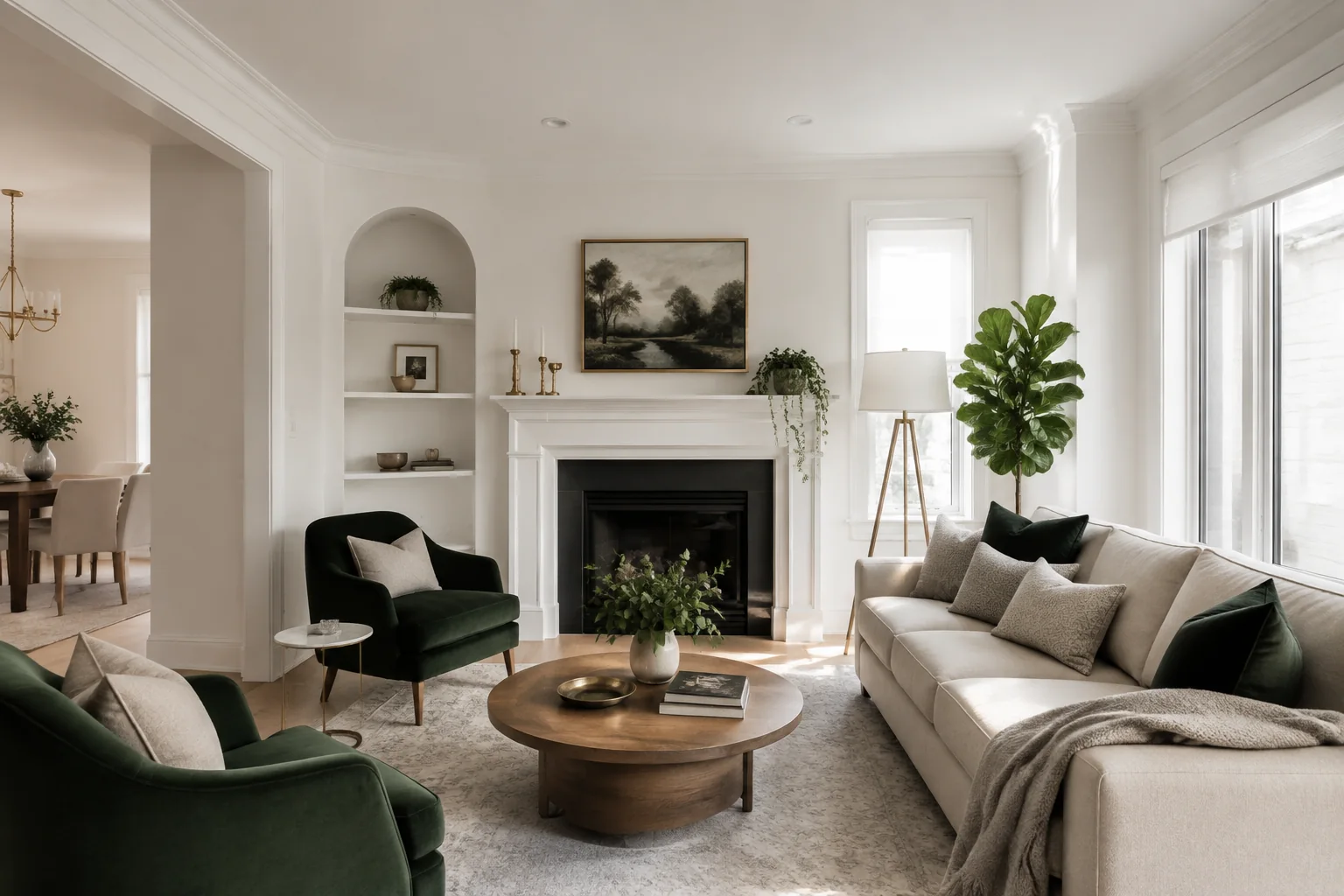
These rooms may have larger wall spans, fireplaces, built-ins, crown moulding, or open connections to hallways and kitchens. Large surfaces add area, while architectural details add cutting and preparation. Sound walls with an open access path keep things simpler; detailed trim, wall repairs, high ceilings, or a major colour change all add stages.
Kitchen
Kitchens are a common example of why a flat rate doesn't work: less open wall area, but grease buildup on walls and ceilings that needs proper cleaning and degreasing before priming, plus more edges around cabinets, backsplash, counters, appliances, and windows. Gold Painter's current painting scope does not include cabinet painting; wall, ceiling, trim, and related preparation should be identified separately.
Bathroom
Bathrooms are compact but preparation and working access can be detailed. Humidity, peeling paint, stains, failed caulk, and previous repairs need attention before repainting. Product and sheen should suit regular cleaning and moisture.
Hallway or stairwell
Hallways contain many door openings, corners, and high-contact areas. Stairwells add height and difficult access, often requiring specialized ladders or platforms. Wall repairs are also highly visible under stairwell lighting and long sightlines, so prep quality matters even more here.
Scheduling several connected rooms together can improve workflow because protection, tools, and colours remain coordinated. That doesn't make a larger project automatically cheaper per room; occupied furniture, colour changes, repairs, and detailed trim still determine labour. It means the on-site estimate can account for the real sequence instead of guessing room by room.
Areas We Serve in the GTA
Richmond Hill is Gold Painter's home base. We also serve Markham, Thornhill, Aurora, Newmarket, and nearby GTA communities, subject to confirming the project and address. Learn more about painting services in Richmond Hill and the areas we serve across the GTA.
Get an Accurate, Free On-Site Estimate
A useful quote begins with the actual walls, ceilings, trim, repairs, access, and finish you want included — and an honest look at the surface condition. During a walkthrough, those details can be measured and put into one scope before scheduling. Get a free on-site estimate instead of guessing from an online number.
Prepare for the visit by listing the rooms, surfaces, preferred colour changes, known damage, and any timing or access constraints. Decide whether furniture will remain and whether ceilings, trim, doors, or closets are part of the same phase. The clearer the requested scope, the more useful the comparison will be.
Take photos of stains, cracks, and hard-to-reach areas, but avoid repairing them immediately before the estimator arrives. Note any previous leak and whether its source has been corrected. If you are comparing options, ask for walls-only and expanded scopes to be shown separately rather than removing preparation from the lower option. Surface preparation is what supports the finish; it should remain visible in every serious quote.
Finally, compare timing and access along with price. An occupied home may need a room-by-room sequence, while an empty property can often be prepared more continuously. The estimate should reflect the plan you can actually support.
That shared scope makes the final number easier to compare, approve, and schedule without avoidable surprises.
FAQ
Why can't you just give me a price per square foot over the phone?
Because the same square footage can mean very different amounts of work. A wall in good condition needing a similar colour is a quick job. A wall that needs sanding and skim-coating, a kitchen that needs degreasing, or a dramatic colour change needing multiple primer and paint coats is a different scope entirely — and none of that is visible until someone looks at the actual surface.
Does painting cost include HST?
Gold Painter adds Ontario's 13% HST to every quote. Confirm whether any price you are comparing is shown before or after tax.
How much does it cost to paint one bedroom?
There's no fixed answer — it depends on the wall condition, the colour change, and what's included (trim, ceiling, closets). A sound wall with a similar colour costs less to prep than one needing sanding, filling, and a skim coat, or a dramatic dark-to-light repaint needing several coats. A short on-site look is the fastest way to get a real number.
Is ceiling painting extra?
It should be identified as its own included or excluded surface. Ceiling painting adds area, overhead work, fixture protection, cutting, and often repair or stain preparation. Never assume a walls-only number includes it.
How many coats does my home need?
The answer depends on the existing and new colours, product, substrate, primer, and coverage. Going from a dark colour to a light one, or covering a stained or repaired surface, usually needs more coats than a similar-tone refresh. An estimate should describe the intended coating system.
What's included in a Gold Painter estimate?
The project is reviewed on site so the surfaces, preparation, materials, timeline, and included work can be discussed before work begins. Ask for optional items to be separated if you are comparing different scopes.
Before accepting an estimate, read the preparation and exclusion notes as carefully as the total. Confirm which walls, ceilings, doors, trim, closets, repairs, primers, and finish coats are included. Clear definitions make competing estimates easier to compare because the same rooms may be priced around very different levels of preparation and completion.
Have a project in mind?
Let's see what your space needs.
Arrange a free on-site visit and we'll talk through your project.